Join us

ContentUpdates and recent posts about GPT-5.4..
Link
@devopslinks shared a link, 1 month ago
FAUN.dev()

Demystifying : Why You Shouldn’t Fear Observability in Traditional Environments

OpenTelemetry is friendly with the past. It now pipesreal-time observability into legacy systems- no code rewrite, no drama. Pull structured metrics straight from raw logs, Windows PDH counters, or SQL Server stats. It doesn’t stop there. Got MQTT-based IoT gear? OTLP export or lightweight adapters .. read more  
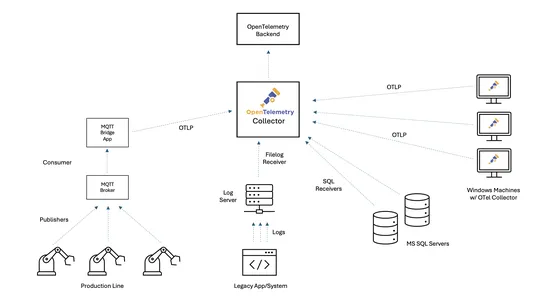
Demystifying : Why You Shouldn’t Fear Observability in Traditional Environments
Link
@devopslinks shared a link, 1 month ago
FAUN.dev()

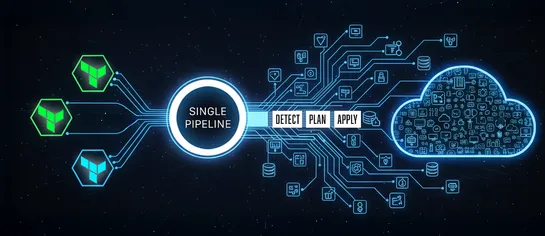
The only Terraform pipeline you will ever need: GitHub Actions for Multi-Environment Deployments

A sharp new GitHub Actions pipeline can now sniff out which Terraform environments changed - anywhere in the repo, no matter how nested - and run them in parallel. Fast, clean, and automatic. It leans onmatrix jobs,Checkovfor static analysis,Workload Identity Federationfor secure cloud access (no ha.. read more  

The only Terraform pipeline you will ever need: GitHub Actions for Multi-Environment Deployments
Link
@devopslinks shared a link, 1 month ago
FAUN.dev()

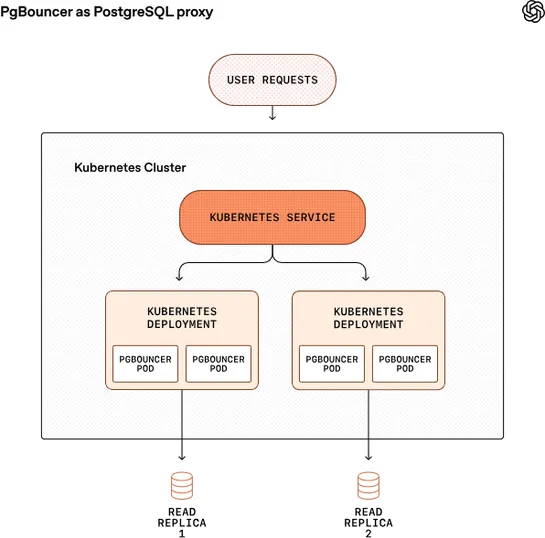
Scaling PostgreSQL to power 800 million ChatGPT users

OpenAI pushedPostgreSQLto handle millions of QPS across 800M users. How? Nearly 50 read replicas, heavy read offloading, and serious trimming on write pressure. Writes? Sent elsewhere. Sharded systems likeCosmosDB, lazy writes, and app-level tweaks helped sidestep PostgreSQL’sMVCCwrite amplification.. read more  

Scaling PostgreSQL to power 800 million ChatGPT users
Link
@devopslinks shared a link, 1 month ago
FAUN.dev()

CloudBees CEO: Why Migration Is a Mirage Costing You Millions

A new CloudBees survey shows 57% of enterprises dropped over $1M on cloud migrations last year. Each effort blew past budget by an average of $315K. The kicker? Many teams still treatmodernization as migration- a shortcut that usually leads to drained budgets, burned-out devs, and delays in shipping.. read more  

Link
@devopslinks shared a link, 1 month ago
FAUN.dev()

How GEICO lowered its $300M cloud spend and decoupled security from the network

GEICO's IT infrastructure transformation journey highlights the shift from legacy network-centric security model to a more modern, identity-first approach. By centralizing identity and secrets management using HashiCorp Vault, GEICO improved security, reliability, and compliance across their hybrid .. read more  

Course
@eon01 published a course, 1 month ago
Founder, FAUN.dev

Painless Docker - 2nd Edition

Docker Compose Docker Grype Syft Docker Swarm Go Python

A Comprehensive Guide to Mastering Docker and its Ecosystem

Painless Docker - 2nd Edition
Story
@laura_garcia shared a post, 1 month ago
Software Developer, RELIANOID

🚀 FinovateEurope 2026

📍 London, UK | 🗓️ 10–11 February 2026 Market-ready innovations. Executive-level networking. Inspiring insights. FinovateEurope brings together banking leaders, fintech innovators, investors, and technology providers to shape the future of financial services at a critical moment for the global fint..

finovate europe 2026 london relianoid
News FAUN.dev() Team
@kala shared an update, 1 month ago
FAUN.dev()

This Is the First AI That Helped Build Itself - Meet GPT-5.3-Codex

GPT-5.3-Codex

GPT-5.3-Codex, an advanced model, enhances coding performance and reasoning, operating 25% faster than its predecessor. It excels in industry benchmarks, supports the software lifecycle, and can autonomously build complex applications. The model is available on multiple platforms with plans for API access.

This Is the First AI That Helped Build Itself - Meet GPT-5.3-Codex
 Activity
@kala added a new tool GPT-5.3-Codex , 1 month ago.
GPT-5.4 is OpenAI’s latest frontier AI model designed to perform complex professional and technical work more reliably. It combines advances in reasoning, coding, tool use, and long-context understanding into a single system capable of handling multi-step workflows across software environments. The model builds on earlier GPT-5 releases while integrating the strong coding capabilities previously introduced with GPT-5.3-Codex.

One of the defining features of GPT-5.4 is its ability to operate as part of agent-style workflows. The model can interact with tools, APIs, and external systems to complete tasks that extend beyond simple text generation. It also introduces native computer-use capabilities, allowing AI agents to operate applications using keyboard and mouse commands, screenshots, and browser automation frameworks such as Playwright.

GPT-5.4 supports context windows of up to one million tokens, enabling it to process and reason over very large documents, long conversations, or complex project contexts. This makes it suitable for tasks such as analyzing codebases, generating technical documentation, working with large spreadsheets, or coordinating long-running workflows. The model also introduces a feature called tool search, which allows it to dynamically retrieve tool definitions only when needed. This reduces token usage and makes it more efficient to work with large ecosystems of tools, including environments with dozens of APIs or MCP servers.

In addition to improved reasoning and automation capabilities, GPT-5.4 focuses on real-world productivity tasks. It performs better at generating and editing spreadsheets, presentations, and documents, and it is designed to maintain stronger context across longer reasoning processes. The model also improves factual accuracy and reduces hallucinations compared with previous versions.

GPT-5.4 is available across OpenAI’s ecosystem, including ChatGPT, the OpenAI API, and Codex. A higher-performance variant, GPT-5.4 Pro, is also available for users and developers who require maximum performance for complex tasks such as advanced research, large-scale automation, and demanding engineering workflows. Together, these capabilities position GPT-5.4 as a model aimed not just at conversation, but at executing real work across software systems.