Join us

ContentUpdates and recent posts about k3d..
Link
@varbear shared a link, 2 weeks, 3 days ago
FAUN.dev()

Partitions, Sharding, and Split-for-Heat in DynamoDB

DynamoDB starts to grumble when a single partition gets hit with more than 1,000WCU. To dodge throttling, writes need to fan out across shards. Recommended move: start with10 logical shards. WatchCloudWatch metrics. DialNup or down. Letburstandadaptive capacitybuy you breathing room - untilSplit-for.. read more  

Partitions, Sharding, and Split-for-Heat in DynamoDB
Link
@varbear shared a link, 2 weeks, 3 days ago
FAUN.dev()

Building Mac Farm: Running 2000+ iOS Pipelines Daily

At Trendyol, they runover 2,000 iOSpipelines daily across130 Mac machines, executing50,000+ unit testsand10,000+ UI testsfor their iOS apps. The team initiated a mobile CI transformation to address the challenges of scale and performance as their team grew and AI usage increased. They built a macOS .. read more  

Link
@kaptain shared a link, 2 weeks, 3 days ago
FAUN.dev()

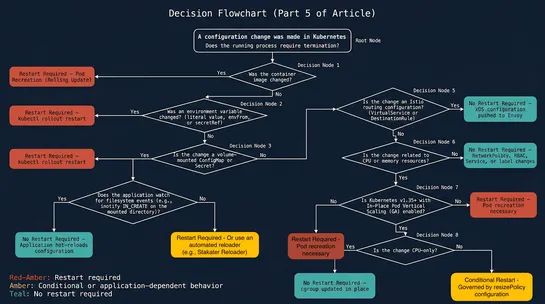
In-place Pod resizing in Kubernetes: How it works and how to use it

Kubernetes 1.33 and 1.34 takein-place Pod resource updatesfrom beta to battle-ready. You can now tweak CPU and memory on the fly - no Pod restarts needed. It's on by default. What’s new: memory downsizing with guardrails, kubelet metrics that actually tell you what’s going on, and smarter retries th.. read more  

In-place Pod resizing in Kubernetes: How it works and how to use it
Link
@kaptain shared a link, 2 weeks, 3 days ago
FAUN.dev()

KubeCon North America 2025 Recap: Federation and

HAProxy just droppedUniversal Mesh, a fresh spin on service mesh design. Forget the per-service sidecars - this model plants high-speed gateways at the network edges instead. Result? Lighter by 30–50% on resources, easier to upgrade, and way less hassle routing traffic across Kubernetes, VMs, and cl.. read more  

KubeCon North America 2025 Recap: Federation and
Link
@kaptain shared a link, 2 weeks, 3 days ago
FAUN.dev()

Ingress NGINX Is Retiring. Here’s Your Path Forward with HAProxy

TheIngress NGINX projectis riding off into the sunset by March 2026. Time to pick a new horse. One strong contender: theHAProxy Kubernetes Ingress Controller. It matches feature-for-feature, comes with deeper observability, and reloads configs without taking your cluster offline. HAProxy’s not stopp.. read more  

Ingress NGINX Is Retiring. Here’s Your Path Forward with HAProxy
Link
@kaptain shared a link, 2 weeks, 3 days ago
FAUN.dev()

udwall: A Tool for Making UFW and Docker Play Nice With Each Other

Hexmos droppedudwall, a declarative firewall manager that finally makesUFWandDockerplay nice. Docker’s notorious for bulldozing past UFW rules via iptables. udwall patches that hole. It syncs rules across both, auto-reconciles changes, backs up configs, and plugs cleanly intoAnsible. No more duct-ta.. read more  

udwall: A Tool for Making UFW and Docker Play Nice With Each Other
Link
@kaptain shared a link, 2 weeks, 3 days ago
FAUN.dev()

Developers don’t care about Kubernetes clusters

Most cloud-native tools obsess over clusters. Not developers. That means poor support for things like promoting code between environments or deploying by feature - not just by repo. The author pushes for a better way: platforms that hide the Kubernetes mess and tame CI/CD. Think feature-driven deplo.. read more  

Developers don’t care about Kubernetes clusters
Link
@kaptain shared a link, 2 weeks, 3 days ago
FAUN.dev()

The Grafana trust problem

Grafana’s been busy clearing the shelves.Grafana Agent,Agent Flow, andOnCall? All deprecated. The replacement:Grafana Alloy- a one-stop observability agent that handles logs, metrics, traces, and OTEL without flinching. Meanwhile,Mimir 3.0ships with a Kafka-powered ingestion pipeline. More scalabili.. read more  

Link
@kaptain shared a link, 2 weeks, 3 days ago
FAUN.dev()

Kubernetes Configuration Good Practices

Stripped down and sharp, the blog lays out Kubernetes config best practices: keep YAML manifests in version control, use Deployments (not raw Pods), and label like you mean it - semantically, not just alphabet soup. It digs into sneaky pain points too, like how YAML mangles booleans (yes≠true), and .. read more  

Link
@kaptain shared a link, 2 weeks, 3 days ago
FAUN.dev()

You Want Microservices—But Do You Need Them?

Amazon Prime Video ditched its pricey microservices maze and rebuilt as asingle-process monolith, cutting ops costs by 90%. No big press release. Just results. Same move from Twilio Segment. And Shopify. Both pulled their tangled systems back intomodular monoliths- cleaner, faster, easier to test, a.. read more  

You Want Microservices—But Do You Need Them?
k3d is an open-source utility designed to simplify running Kubernetes locally by wrapping K3s (Rancher’s lightweight Kubernetes distribution) inside Docker containers. Instead of creating virtual machines, k3d uses Docker as the execution layer, allowing developers to spin up multi-node Kubernetes clusters in seconds using minimal system resources.

k3d is especially popular for local development, CI pipelines, demos, and testing Kubernetes-native applications. It supports advanced setups such as multi-node clusters, load balancers, custom container registries, port mappings, and volume mounts, while remaining easy to tear down and recreate.

Because it uses K3s, k3d inherits a simplified control plane, bundled components, and reduced memory footprint compared to full Kubernetes distributions. This makes it ideal for developers who want a realistic Kubernetes environment without the overhead of tools like Minikube or full VM-based clusters.

k3d integrates cleanly with common Kubernetes workflows and tools such as kubectl, Helm, Skaffold, and Argo CD. It is frequently used to validate manifests, test Helm charts, and simulate production-like environments locally before deploying to cloud or on-prem clusters.